DrH Autodesk engineering tools

DrH 1.0.0 dynamic tool library for Autodesk hosts

A tool library that keeps growing, inside Civil 3D, Revit and Navisworks.

DrH is not a fixed pack of add-ins. It is a live library: tools are published, your panel picks them up on the next update, and every Autodesk year from 2021 to 2027 is matched to the right runtime for you. When something is missing, Pro users ask for it and it gets built.

Windows installer, 60 MB. The manager is free forever. Pro is $100 per user per year; Max is $375 a year for a 5-user pack.

release
1.0.0current stable build
host range
2021–2027Civil 3D, Revit, Navisworks
packages
LISP + DLLwith .addin sidecars

Illustration of the DrH workflow

01 hosts

Built around the three products your team already opens every day.

Each host keeps its own conventions. DrH sits inside all three with the same panel, the same import flow and the same naming, so a tool behaves the same way wherever it runs.

C3D .lsp.addin

Civil 3D

One ribbon entry for both LISP routines and .NET tools, instead of two separate loading habits.

  • LISP routines in a dropdown
  • DLL commands launched from the panel
  • Local and online imports
  • List refreshes as soon as you add or remove
  • Per-tool icons when a PNG is supplied

For production drafting, utility automation and corridor work.

RVT .addin

Revit

Import a package and DrH reads the .addin file beside it to work out which commands to expose.

  • DLL add-in libraries
  • .addin sidecar detection
  • Multiple commands parsed per package
  • Local and online imports
  • PNG icons picked up per item

For BIM utilities that would otherwise need a manual add-in drop.

NAV .addin

Navisworks

Keeps custom review and coordination plugins reachable from a dedicated panel in Navisworks Manage.

  • DLL plugin management
  • Compact panel behaviour
  • Filtering by host version
  • Local and online imports
  • The same diagnostics log as the others

For clash, review and coordination tools kept in-house.

02 features

Start with the four that carry the most weight.

The library is wider than this, but these four are the ones people licence DrH for. Each removes a step that normally means redrawing something by hand, or exporting through a third package just to get a file another consultant can open.

Civil 3D

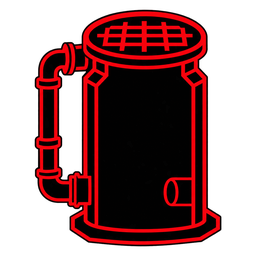
Drop Manhole Builder

DROPMH

Where an incoming pipe lands too high above the outgoing invert, this builds the backdrop properly — vertical leg, bend and connection back into the chamber — as real network geometry that still schedules and still reads in profile.

high inlet → scheduled backdrop structure

Civil 3D

Dry Network Builder

DRYNET

Builds a full dry utility run as a pressure network straight from an alignment — ducts, bends and fittings placed along the corridor with cover respected. The run stays tied to the alignment, so a late route change redraws itself instead of costing you an afternoon.

alignment → pressure network, still dynamic

Civil 3D → Revit

Network to Revit

C3D2RVT

Rebuilds Civil 3D gravity and pressure networks as native Revit pipework you can tag, schedule and clash — not a mesh in a linked file. Invert levels carry across, and sizes map to your own Revit pipe types.

gravity + pressure → native Revit pipes

Navisworks

NWC to DXF

NWC2DXF

Navisworks has no DXF export of its own. This writes the model, a selection or a search set out as DXF — 3D geometry, or flat 2D linework from any section plane or saved viewpoint — with layers taken from the selection tree.

federated model → 2D or 3D DXF

Everything the manager does, in one panel.

DrH exists to shorten the distance between writing a tool, handing it out and using it — with enough diagnostics that a failure is traceable rather than mysterious.

Local import

Add a package straight from a folder on the workstation into the managed DrH structure.

browse → validate → register

Online libraries

Pull from the shared library, with separate feeds for LISP routines and DLL packages.

library / lisp   library / dll

Host-aware loading

Packages are filtered by the Autodesk host version and the runtime channel it expects.

2021–2024 FW 4.8   2025+ .NET 8

Sidecar detection

A matching PNG becomes the tool icon and a Revit .addin supplies the commands. No extra wiring.

Tool.dll + Tool.png + Tool.addin

Safe updates

Updating the manager leaves your installed tools where they are, so an update is not a redeployment.

update ≠ reset

Diagnostics log

Import, load, update and run activity is written to a log on the desktop you can actually open.

why did this tool not load?

One identity

The same DrH presence in all three hosts, so a tool is found in the same place every time.

consistent across hosts

Compact panel

Small icons, short menus and a list that refreshes the moment something is added or removed.

instant list refresh

03 library

The library is the product. The manager just delivers it.

Most add-in packs ship a fixed set of commands and then age. DrH works the other way round: tools are published into a shared library, and your panel picks up whatever is new the next time you press Update. Nothing to reinstall, no IT ticket, no waiting for the next release cycle.

One list, three products

Civil 3D, Revit and Navisworks tools sit in the same catalogue, tagged by the host and the years they are published for.

filter by host · type · year

New tools just appear

Press Update in the panel and anything published since your last check is there, already matched to your host year.

publish → update → run

You can add to it

Pro users describe a task they repeat by hand. If it fits, it gets built and published — for you and for everyone else on the plan.

request → build → library

It follows Autodesk

A new host year does not strand your tools. Library packages are republished against it as part of the licence, not as a paid upgrade.

2021 → 2027, one panel

04 workflow

Package to production, in four moves.

  1. 01

    Add

    Pick a tool from local storage or from the online DrH library.

  2. 02

    Validate

    DrH checks the host type, the supporting files and the runtime path.

  3. 03

    Run

    Launch the command from the DrH panel, inside the Autodesk product.

  4. 04

    Maintain

    Update, remove or replace a tool without touching the rest.

— the case for it

What changes once tools are managed.

Tools spread across folders

the usual arrangement

  • Routines live on network shares, desktops and USB sticks
  • Every new Autodesk year means another manual deployment
  • LISP and DLL tools are loaded in completely different ways
  • Nobody can say what is actually installed on a given machine
  • When something fails to load, you guess

Tools managed through DrH

after install

  • One panel lists every managed tool in each host
  • Packages are matched to the host year and runtime
  • LISP, DLL and .addin go through one import flow
  • Add, update and remove without rebuilding anything
  • The log tells you what happened

05 plans

Free to run your own tools. From $100 a year for the library.

The manager costs nothing and always will — import your own packages, load them into any host year, read the log. A paid licence is what opens the maintained library and lets you put requests into it: Pro for one engineer, Max for a firm.

Free

the manager
$0forever
no account

Run the tools you already have, properly.

  • The DrH panel in all three hosts
  • Import your own LISP, DLL and .addin packages
  • Host-aware loading, 2021–2027
  • Diagnostics log on the desktop
  • Online tool library
  • Request a tool
Download DrH
recommended

Pro

the library
$100per user
per year

Everything in Free, plus a library that keeps growing.

  • The full online tool library
  • Request a tool and have it built
  • Every tool and update published in your year
  • New Autodesk years covered as they land
  • Early access builds
  • Priority replies, with your log read for you
See what Pro includes

Max

for firms · 5-user pack
$3755 users
per year

Everything in Pro, run centrally, for firms. A fixed pack of 5 users, $75 per user per year.

  • Everything in Pro, for every seat
  • A private library feed only your office sees
  • Central distribution and a seat console
  • Your in-house tools hosted alongside
  • 3 support emails a week, next working day
  • One invoice, one renewal date
Get a Max pack

Exactly 5 users. Invoiced yearly.

06 install

Four steps, then it's just there.

Run the installer on a workstation that already has the Autodesk products installed. DrH attaches to the hosts it finds.

after install, you should see
Civil 3D      DrH panel on the ribbon
Revit         DrH panel on the ribbon
Navisworks    DrH panel in Manage
log file      DrH log on the desktop
  1. step 01

    Download DrH_Setup.exe from this page.

  2. step 02

    Run it on the workstation where Civil 3D, Revit or Navisworks is installed.

  3. step 03

    Open the Autodesk product and confirm the DrH panel is there.

  4. step 04

    Use Add, Update, Remove, Settings and About to manage your tools.

07 download

Get the current DrH setup package.

The installer is served directly from the DrH download domain, so the button starts the file straight away rather than sending you through a preview page. Install it once; from then on the panel updates itself.

  • Direct R2 download — no third-party preview screen
  • One permanent link that survives new builds
  • Free to install and use with your own tools
  • Library tools arrive later through Update, not a reinstall

08 faq

Questions people ask first.

Which Autodesk products does DrH support?

Civil 3D, Revit and Navisworks. Package families target host versions from 2021 to 2027.

Can it manage both LISP and DLL tools?

Yes. Civil 3D covers LISP routines and .NET DLL tools. Revit and Navisworks focus on DLL tools, with Revit add-ins handled through .addin sidecars.

Where do tools come from?

From a folder on the workstation or from the online DrH library. Both use the same import flow, and LISP and DLL packages have separate library feeds.

Does updating DrH remove my installed tools?

No. Updating the manager leaves the managed tools in place, so an update does not force a redeployment.

How does it handle different runtimes?

Packages are organised by runtime channel. Use the family that matches the host you are loading into, and several Autodesk versions can sit on the same machine without colliding.

What is a sidecar file?

A file sitting next to a package that DrH picks up automatically. A PNG with a matching name becomes the tool icon; a Revit .addin file supplies the commands to expose.

Where do I look when a tool doesn't load?

The desktop log. Import, load, update and run activity is written there, so a failure can be traced instead of guessed at.

What does DrH cost?

The manager is free forever, including importing and running your own tools. DrH Pro is $100 per user per year for one named user, and DrH Max is $375 a year for firms, as a fixed pack of 5 users. Both add the maintained online library, every update published during your year, and the ability to request new tools. Billing is yearly.

Can I ask for a tool that doesn't exist yet?

Yes — that is the point of Pro. Describe the task you repeat by hand and, if it fits the library, it gets built and published. It then shows up in your panel the next time you press Update. Send a request.

What is a licence attached to?

One named person, across as many workstations as that person uses. A desk machine and a laptop are one licence, not two.

Can the installer be updated without changing this link?

Yes. Replacing the same R2 object while keeping the filename DrH_Setup.exe keeps the download link on this page unchanged.
09 support

Stuck on an install or a deployment?

Write with the host version, the DrH build number and the relevant part of the desktop log. That is usually enough to identify the problem on the first reply.

Open the full form

Send a request

Enter an address we can reply to.
A sentence or two is enough, but we need something to go on.